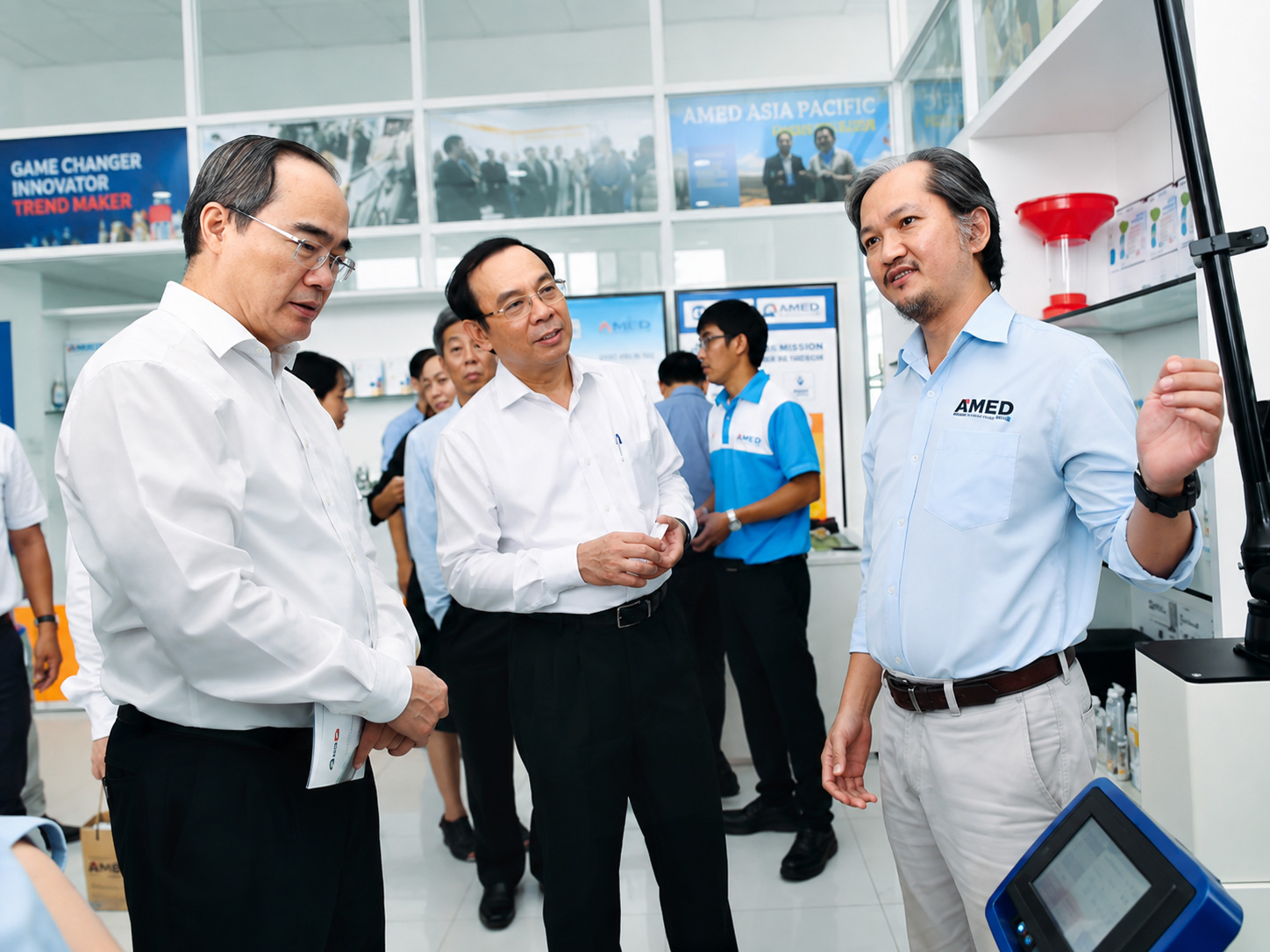
Drawing on years of experience in laser research and development in South Korea, engineer Luong Vu Dang Quang returned to Vietnam with a clear ambition: to develop aesthetic laser systems that are better adapted to local skin characteristics and clinical requirements. One of the key outcomes of this journey is AMED’s CO2 fractional laser technology for skin resurfacing and aesthetic applications.
From Electronic Physics Engineering to Laser Technology
Luong Vu Dang Quang graduated in Electronic Physics from the University of Science, Vietnam National University Ho Chi Minh City. His academic background in physics, electronics, and high technology provided a strong foundation for pursuing advanced optical and laser systems.
In 2008, he was selected to work in South Korea through a bilateral cooperation program between Vietnam and South Korea for high-tech engineers.
What initially began as an international career opportunity developed into a seven-year professional journey at a company specializing in the research and manufacturing of laser systems for dermatological applications.
Working in this environment allowed him to gain extensive practical experience in laser technology, optics, equipment engineering, and the process of transforming laboratory research into commercially viable medical and aesthetic devices.
Recognizing the Opportunity in Aesthetic Laser Technology
During his years in South Korea, Quang observed the rapid growth of aesthetic and skin treatment technologies. At the same time, many advanced laser systems available in Vietnam were imported from overseas.
The high investment cost of imported equipment presented a significant barrier for aesthetic clinics and professional skincare facilities. At the time, a complete CO2 fractional laser system, including its technology and components, could cost several hundred million Vietnamese dong.
This led to an important question: Could Vietnam develop its own aesthetic laser technology instead of relying entirely on imported equipment?
The idea became a major motivation for Quang to return to Vietnam and establish AMED, with the goal of researching, designing, and manufacturing laser equipment for aesthetic and skin treatment applications.
Developing CO2 Fractional Laser Technology in Vietnam
After beginning the research and engineering process, the AMED team completed its first CO2 fractional laser system in 2017.
The device was developed for applications including skin resurfacing, wrinkle improvement, and scar treatment. Its operating principle is based on delivering controlled laser energy to create precisely defined micro-injuries within the skin.
Rather than treating an entire area uniformly, fractional laser technology creates microscopic treatment zones across the targeted area. Laser energy can therefore be controlled and distributed in a way that supports the skin’s natural regenerative process while limiting unnecessary tissue damage.
The development of the system received support from the Saigon Hi-Tech Park Incubation Center, an enterprise incubation organization operating within Ho Chi Minh City’s Saigon Hi-Tech Park.
Designing Laser Technology for Vietnamese Skin Characteristics
One of AMED’s key considerations during the development process was the difference in skin characteristics between populations and the environmental conditions in which aesthetic equipment is used.
Instead of simply replicating configurations developed for overseas markets, the research approach considered the biological characteristics of Vietnamese skin together with local environmental factors such as climate and weather conditions.
The objective was to create a laser system capable of providing treatment parameters that are more appropriate for practical applications in Vietnam.
The laser system was engineered with a treatment spot size of approximately 0.07 mm. A smaller treatment spot allows laser energy to be concentrated within precisely defined areas, supporting the fractional treatment approach.
How Fractional Laser Technology Supports Skin Resurfacing
CO2 fractional laser technology works by delivering laser energy to precisely defined microscopic areas of the skin, creating controlled thermal treatment zones.
These controlled treatment areas stimulate the skin’s natural repair mechanisms. As the healing process progresses, new skin tissue develops and the treated surface gradually undergoes regeneration.
Because the laser acts through microscopic treatment points, surrounding areas of untreated skin remain available to support the recovery process.
The treatment process takes place progressively. Following laser exposure, the treated areas may form small superficial crusts before naturally shedding and revealing newly regenerated skin underneath.
This mechanism forms the technological basis for using CO2 fractional laser systems in skin resurfacing programs and in applications targeting the appearance of wrinkles and scars.
From R&D to Real-World Clinical Applications
Developing advanced equipment is only the first step. A medical aesthetic device must also demonstrate its practicality and reliability in real operating environments. For this reason, AMED’s development process extends beyond laboratory engineering to practical deployment.
Following development, the CO2 fractional laser system was transferred and introduced into use at 108 Military Central Hospital in Hanoi, as well as at selected clinics and aesthetic centers in Ho Chi Minh City and other provinces.
Real-world implementation provides valuable experience for further equipment optimization, technical refinement, and the development of solutions that better address the needs of professional users.
Vietnamese Laser Technology with International Reach
AMED’s CO2 fractional laser technology has also reached international markets through contract manufacturing for overseas partners.
The equipment has been exported to the United States under the customer’s own brand, demonstrating the potential of Vietnamese engineering and manufacturing capabilities to participate in the international aesthetic technology supply chain.
What began as an effort to reduce dependence on imported equipment has gradually evolved into a broader technology development capability, encompassing product research, engineering, optical calibration, manufacturing, and continuous improvement.
A Long-Term Commitment to Technology Development
The development of CO2 fractional laser technology represents an important milestone in AMED’s technology journey. Its significance goes beyond the development of a locally manufactured device.
The project has also contributed to building in-house capabilities in research, engineering, system design, optical calibration, manufacturing, and product refinement.
Building on this foundation, AMED continues to pursue the development of aesthetic laser equipment and technology solutions for professional skin treatment, while expanding its ecosystem to include professional cosmeceuticals and skincare solutions.
By combining international experience with local engineering capabilities, AMED aims to contribute to the development of Vietnamese aesthetic technology and create laser solutions that can serve professional clinics, aesthetic centers, and partners in Vietnam as well as international markets.